Noises Off

Kevin Drum reacts to the 1.5-hour systematic refutation of GOP talking points by one Barack Obama today during the GOP caucus meeting (which you can see and read for yourself; Obama is particularly ferocious on healthcare and the preposterous rhetoric surrounding same. Also economic proposals. Worth your time.):

Right now Republicans have a built-in advantage when it comes to attack politics and they’d be fools to give it up. A format like this, which puts the president front and center, allows him to directly call out distortions and lies, and rewards conversation rather than machine-gun style talking points, is something Republicans should justifiably be very afraid of. Unless they’re suicidal — or somehow figure out a way to take better advantage of the format — they’ll never allow this to happen again. Without the noise machine, they’re lost.

I think this overlooks the fact that Obama can simply host the meeting anyway. TV cameras will be there. If the GOP refuses to show up, or won’t let him in the door, it makes for a powerful object lesson. Either they’re a) afraid to face him -or- b) have no valid response and know it. If they let him in but close it to cameras, that’s equally powerful in its own way. Any of these outcomes can then become the message for the next several days. You could even have count-up calendars: 64 days since the GOP last agreed to meet with the President. Will they turn up on Thursday? It’s the sort of simple, powerful concept that the American people will instantly and viscerally understand. And it will piss them off.

The Democrats need to focus all efforts at messaging. Most of the country is utterly unaware of just how pervasive GOP obstruction is, and will never find out on FOXnews. So you have to make it sufficiently unavoidable. Everyone must see it first hand, or hear about it at the water cooler, or see the particularly defenestrating YouTube clip, or what-have-you. Every day. Every week. Now until the mid-terms.
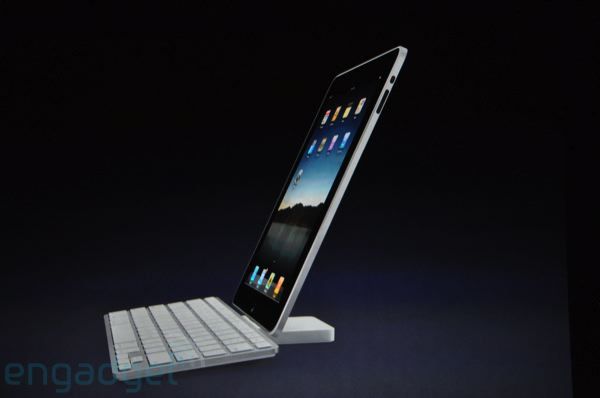
if you use it for just a few minutes, it becomes obvious that the iPad is not a big stretched-out iPhone, but rather that the iPhone is a shrunken stripped-down version of the iPad. The iPad is what they’ve been building toward all along.

John Gruber, agreeing with Lemkin.

iPAM

Alright then, how did we do? We were basically calling for:

It makes much more sense going forward for Apple to abstract away the “I’m ready to sync” part of the current equation; you buy the app, it comes with an iPhone app, they are linked and automatically exchange info. Changes then sync next time you dock the phone or tablet or, presumably, automatically over the air if you so desire.

Some of which we got, I guess. Certainly not the xenomorph part of my theory (yet); instead, you get to buy iWork for your Mac, and then buy it three more times for your iPad. Why the hell didn’t I think of that? But we didn’t get tight, vertical integration of any kind, really, even though Steve did use the product matrix with the hole between iPhone and a laptop. Just have to wait for some future revision (if ever) to really get the full-on, 24/7 back-and-forth arrows going there. Or else they suspect the entire “home computer” side of the equation will gradually extinguish itself over a number of years and obviate the whole issue. And maybe it will. iPad certainly represents a first step in that direction.

That’s what makes its interface choices, and the relative popularity of same very important going forward. As the Macintosh set the standard for computing, well, so far, I strongly suspect the iPhone and its descendants is setting the standards for future consumer computing. At the very least as said computing gets done through Apple.

AT&T stays on as carrier. If Apple was ever going to go with Verizon, this was the product. Not happening. Mark my words, Apple will buy or found its own damn dumb-pipes company before it has product on the Verizon network. Period.
The lack of contracts part of the equation is certainly interesting. I suspect AT&T sees it as a way to lessen the network impact by encouraging people to buy a month of service when they really need it, then let the service lapse for a while. No other explanation for it, really. We can therefore expect iPhone 3G service to get markedly worse in densely populated areas since they think they’ve got the overloading issue prefigured. Wonderful.

My overall iPad-specific thoughts in convenient numerical form:

  1. I think the iPad is really aimed at MacBook Air users; they’re not exactly power users, but they need to be able to open and edit a spreadsheet or a document of some sort on the go. Weight is their critical factor. iPhone, though pocket-sized, can’t provide the file editing and really never will; again: it’s pocket-sized. And but so the same folks clearly aren’t willing to lug a MacBook around, since any MacBook out there is cheaper and vastly more capable than an Air, and yet they went for the Air anyway.
    Obviously, the non-laptopped are also targets here; they may well have an iPhone and wish it did just a bit more, or they want something like an iPhone but don’t want to or couldn’t mess with the contracts and/but also saw iTouch as too limiting for one reason or another.
  2. The sandboxing implicit in the iPhone/iPad OS automatically and fairly drastically limits what you can do with it when compared with a “real” laptop computer. But I suspect we’ll only see more and more of that approach in consumer devices. Notably missing from the demos, though, was “what happens to the files” you are opening/saving/editing with the various iWork apps that were demoed. Pretty clear they aren’t automatically syncing via the cloud, or we’d have been shown it. I suspect you have to plug it into a Mac, where you then bump them back into your traditional filesystem. Presumably iTunes then deals with pushing any Mac-side updates back again and sorting out versions. Or not. Small deal to give you the capability to move this stuff into .me, though. Seems so painfully obvious, one wonders where it was today.
  3. Brushes looks like an absolute killer app on the iPad (as opposed to the iPhone version of the same app being interesting, for sure, but not really a reason to buy an iPhone/iTouch). Seriously, it’s DTP for tablets.
    Likewise, I think comic books, textbooks, and newspapers will prove to be unexpectedly powerful. The interweaving of text, video, charts, chat, depth, and you-name-it really could revitalize the whole news-papering trade. Likewise comics seem to be crying out for a killer platform and easy, impulse purchases that don’t involve Comic Book Guy (worst tablet ever). Just seems like an awful lot of business to be done in the currently-printed realm, especially when iPads are down ~$200. Perhaps already, seeing as KindleDX is  ~$450, of similar dimensions, and an utterly hobbled, so-last-decade device by comparison.
  4. Another dark horse not related to comics: The MLB app looks like something out of the not-too-distant future that I’ve been promised every time anyone does a “what will  the teevee be like in 10 years” piece for OMNI. Wowie. Unlimited possibilities. Pop-Up video goes wide. Really a big deal.
  5. The matrix: I really never thought that, as of this announcement, iPhone would be instantly, clearly, and definitively the iPad mini. But it is. Funny how things work out sometimes.
  6. The name? Boy, Apple is really feeling its oats right now. The least of the problems with the name is its relative proximity to iPod. Generally speaking: not so fresh. In related news: the countdown clock for the end of the iEra is probably set back another five or ten years now. Jesus.

Still in Charge

Print out and laminate, [annotated and extended for you convenience]:

  1. [The Democrats in Congress] need to remember that they’re still in charge. Democrats have the White House and large majorities in both houses of Congress. They get to set the agenda.
  2. Democrats have to understand is that they already passed health care; they own the legislation. [As such, they will be campaigning on this issue whether it is signed by Obama or not. No matter what happens between now and the mid-terms. Better to have distinct policy issues to point to, as opposed to a miserable failure to act that they have to paper over.]
  3. If Democrats get the urge to reach out to their colleagues across the aisle, they need to remind themselves that Republicans have no incentive – or desire – to do anything other than obstruct any and all legislation the Democrats might seek to pass. [Furthermore, they need to tee up some popular, populist-leaning policies that they know the GOP will obstruct. And then crucify them.]
  4. Republicans will cry “big government!” at any proposal that doesn’t involve tax cuts for the purchase of monocles and yachting accessories, but Democrats should ignore them. [Furthermore, Democrats should repeatedly excoriate the GOP for their views. When asked to apologize, raise the temperature of the rhetoric. When asked to apologize for that, raise it again.]
  5. If [Democrats] want to avoid catastrophe, they’ll have to go against all their instincts and show the American people that they have some spine. The last thing they want to be saying to the public is, “Re-elect us, even though we are obviously incapable of getting anything done.”

Read the whole thing.

I am thrilled to announce to you that iPad will start at $499

Steve Jobs.
Going to sell a few of those after all, even with a largely non-functional (but also non-contract) AT&T 3G data network.

We’ve been able to achieve 10 hours of battery life. I can take a flight from San Francisco to Tokyo and watch video the whole time.

Steve Jobs.
Methinks that we are “able to achieve” and “I can take a flight … to Tokyo” are utterly unrelated statements here.

Free to vote

Democratic leaders in the Senate are asking colleagues who are reluctant to support Bernanke’s nomination for a second term as Federal Reserve chairman to nevertheless vote with them to end a filibuster and allow a vote on the actual nomination. The reluctant members would then be free to vote no to express their displeasure.

Of course, for everything else, a vote for/against cloture is somehow magically indistinguishable from a vote for/against final passage. Un-fucking-believable. And you can bet that every last motherfucker on the yes-cloture no-confirmation list is somebody who’s come out all “there’s no difference between cloture and final passage” before. And will expect (and experience) no blow-back from this sort of utter hypocrisy.

And we wonder why these fucktards fail. As Krugman notes: “I can hardly think of anything more calculated to solidify the view that Wall Street doesn’t have to play by the rules that apply to everyone else.” Yep.

The Democrat as currently constituted is utterly and completely unfit to govern. At least they won’t have to worry about it anymore come 2010/2012. Then they can go back to going along with whatever the GOP says to do, all in the name of comity.

I say again: any Democrat, or fucking execrable fucktard that is allowed to caucus with them, that votes against cloture on a key issue or critical Democratic initiative should promptly find themselves so far down the seniority tree that they are often unable to purchase bean salad at the Senate cafeteria. Period. Until that happens, you’ll end up with the shit-sandwich we’ve been eating since they took over in record fashion.

In the same vein: You want to start over on insurance reform, GOP? Fine, as a first step towards that exciting new future, let’s pass a revocation of all health care provisions, including Medicare, for all serving members of Congress and their families, effective immediately; furthermore, we will tie any and all future health plans for same to the costliest option offered under any new legislation. Put your fucking market money where your fucking market mouth is, motherfuckers.

Is this all so very complicated?