We’re Comfortable Together

PZ Myers represents on all things marriage:

If we strip marriage of the asymmetry of power, as we must if we allow men to marry men and women to marry women, then we also strip away the man and wife, dominant and submissive, owner and owned, master and servant relationship that characterizes the conservative view of marriage. This is what [right wingers] want to preserve, and this is what they are talking about when people like Gingrich echo those tired phrases about “Judeo-Christian values” and complain that their “civilization is under attack”. And it is, when we challenge their right to treat one partner, so-called, as chattel.

And once you look at it that way, you see no abuse of their values when Gingrich goes tomcatting around—he’s simply asserting his traditional privilege as the Man.

The whole thing is really indispensable.

We’re Comfortable Together

Dear New York Times, (Four things)

Your paywall is going up on March 28th. Fair enough. I see non-print-subscribers will need to pay somewhere between $15 and $35 per month to access more than a few articles.
We can agree not to bicker over the inherent stupidity of having tiers like “web” vs. “tablet.” That sort of foolishness is left as an exercise for you, the apparent fool. But I will say: charge for the app but then make it the best way anyone can imagine for accessing the single-priced, dumb pipes version of your content.
That said, what I don’t see is that I, the potential online subscriber, will be getting much of anything in return for my hard earned dollars (other than baseline access, of course).

So here’s a short list of what I, the paying subscriber, expect from you:
1) Access to all articles as a single page by default. If I am mentally unstable enough to request articles be broken into several pages by default, then so be it; however, it is therefore sadly unlikely I am able to hold a job and pay for a subscription. But if you’re going to persist in this multipage CPM crap, then I, the subscriber, should get to choose whether or not I have to take part in it now that I’m paying for the privilege.

2) No content-obstructive ads, ever. I realize ads are a fact of life for you, me, and us, and I respect that they have to be there (just like they are in the physical paper, whether or not I subscribe to it). However, the physical paper does not suddenly and irrevocably wrap my head with a mandatory, inescapable, full page ad that then lingers for some length of time each time I pass one while reading the physical Times. Neither should the electronic version of that article. You are a content company, start respecting both your content and the prospective buyer of said content.

3) Mobile ads should furthermore be minimizeable. Pixels are precious on an iPhone or other small screened devices. If you are going to tier out “mobile” versions for special and exrtra cost over “web” versions, then you have to let me minimize the ad. I have seen your ad. Now let me drop it down or scroll it up so I can have a few more lines of text per page. In fact, since you love tiers so much, mobile is the one space where I should be able to purchase an entirely ad-free version for some additional fee. Those pixels are worth that much to me. At least give me the option to pay for them.

4) Finally: a subscriber should have access to full text RSS feeds of everything you publish.

That this is very little to ask is self-evident. That none of it will be granted is similarly self-evident. That none of these key, user favoring absences will be cited when the paywall fails to attract much in the way of a revenue stream is probably also all-too-self-evident. So it goes.

Earthquake 9.0

According to recalibrations of old seismograms by the US Geological Survey (USGS), 11 “megathrust” earthquakes with an 8.5 magnitude or greater occurred worldwide in the twentieth century. Ten of these 11 earthquakes occurred offshore or near a coast, nearly all with tsunami damage. So far in the twenty-first century, five such megathrust earthquakes – with severe tsunami damage in four cases – have occurred offshore.

Proper use of earthquake science advises against an overreaction to the Tohoku disaster, but also spotlights further dangers that policymakers must take into account.

[…]

Aftershock patterns benefitted earthquake forecasting when Ross Stein and his USGS colleagues discovered that the stress increments of past large earthquakes were good predictors of where the next large earthquake would occur. Long after the aftershocks subsided – months, years, or decades after – another earthquake of similar size often broke within the next segment of the fault zone, where stresses had been increased only slightly in relative terms. How time-delayed stress-triggering occurs is a mystery, but it has been documented worldwide.

An irregular series of large, damaging earthquakes shook the North Anatolian Fault in the twentieth century from east toward the west across modern-day Turkey, reaching the Sea of Marmara in 1999 with the Izmit earthquake. Stress increments from Izmit have loaded the fault segment next to Istanbul. The 6.6 magnitude San Fernando earthquake in 1971 loaded the nearby fault that caused the 6.7 Northridge earthquake in 1994. More germane to Japan, the 9.3 Sumatra-Andaman megathrust earthquake in December 2004 loaded the next subduction-zone segment to the south, and this segment generated an 8.6 megathrust event only three months later in March 2005. No prediction can be made today for Japan, but it is safe to forecast a sharply increased probability for a major earthquake on the broad, simple subduction-zone segments both north and south of the Tohoku rupture zone. The segment to the south lies offshore the Tokyo metropolitan area.

Earthquake 9.0

Scale and Magnitude

Some accounting matters:

The 9.0 magnitude quake (the fourth-largest recorded since 1900) was caused when the Pacific tectonic plate dove under the North American plate, which shifted Eastern Japan towards North America by about 13 feet. The quake also shifted the earth’s axis by 6.5 inches, shortened the day by 1.6 microseconds, and sank Japan downward by about two feet.

Scale and Magnitude

Not Equal to the Challenge

John McCain, 2008: We stand warned by serious and credible scientists across the world that time is short and the dangers [of climate change] are great. The most relevant question now is whether our own government is equal to the challenge.
John McCain, 2010: It’s an inexact science.
Ezra Klein, 2011: I take that as an exact answer to McCain’s original question: No, our government is not equal to the challenge.
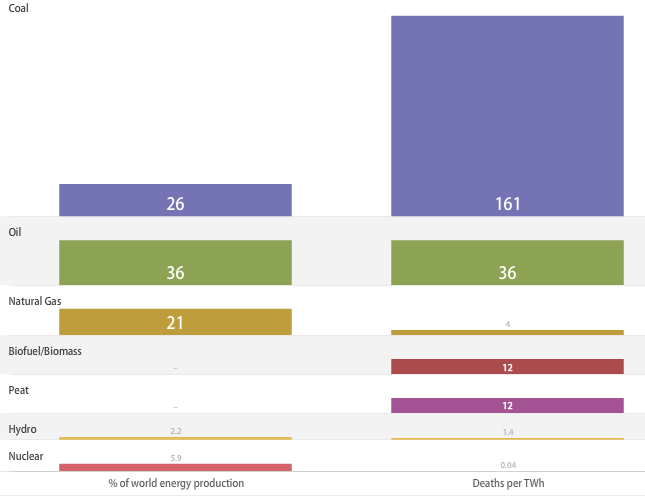
Lemkin: The moment people are even one one hundredth as irrationally terrified of carbon emissions as they are of dread “radiation” (regardless of source, quantity, exposure, time, distance, shielding, or any other mitigating factor: sweet merciful Flying Spaghetti Monster, it’s RADIATION!!!!!) then we’ll be getting somewhere on the issue. Until then: Al Gore is fat. It snowed today. And etc… The fact is: carbon emissions (and the associated other outputs of fossil fuel use) have a real, daily, and quantifiable health impact upon us all over and above the impacts on the broader global environment. That’s a collective impact that is almost certainly immeasurably greater in terms of real damage to lives, lifespan, and property than that of all nuclear accidents everywhere and forever combined. But, hey: Charlie Sheen everyone!

O’Keefe and Journalistic Malpractice

Gee, I’ve never been more surprised by a reveal of misleading editing:

If you watch the entire conversation, it becomes crystal clear that O’Keefe’s provocateurs didn’t get what they were looking for. They were ostensibly offering $5 million to NPR. Their goal is clearly to get Schiller and his colleague Betsy Liley to agree to slant coverage for cash. Again and again, they refuse, saying that NPR just wants to report the facts and be a nonpartisan voice of reason.

And this also falls into the utterly gobsmacking shock of the ages category:

James Poniewozik of TIME’s “Tuned In” blog admits that he reposted O’Keefe’s video without watching the entire two-hour exchange and suggests that many other reporters did the same.

Poniewozik speculates that O’Keefe posted the extended video because he was confident that “by the time anyone took the time to go over the full video, the narrative would be established, the quotes stuck in people’s minds and the ideological battle won.”

No shit. After all, one can’t expect journalists (and especially not millionaire pundits) to spend their time watching the thing they’re going to report on. They can’t even be bothered to force an intern to do it and report back. There’s just no time. People have to be fired. Now. After all, there’s no reason to believe this all might be purely manufactured horseshit. And, of course, one should never forget that we sorry rubes out here in our pajamas just can’t understand what it is to do journalism.
That aside, it’s almost like even serious people should begin to gather that this sort of pattern is their whole operation. They throw out a distorted narrative, claim some scalps, and move on. They haven’t even had to bother to find a new messenger, despite the fact that every one of these things has been utterly disproved as shamefully and willfully misleading. That would be bad enough, but you, the media, still misreport the ACORN business (among many, many other potential examples) as though no newer information ever emerged on that front. To this day and probably right now.

And, it’s worth noting (as the linked article does) exactly who due diligence in this sorry case fell to:

Glenn Beck’s website, “The Blaze,” ran a critique titled, “Does Raw Video of NPR Expose Reveal Questionable Editing & Tactics?” The short answer: Yes.

So it takes Glenn Beck’s folks to do what NPR and any other respectable journalistic outfit should have done immediately and for as long as it took before taking action: study the actual source data because we know this guy has a long, long history of purposefully misleading and creative editing. But do you come out immediately and say that? Eviscerate the messenger? Of course not. You fire people and strengthen their case against you by creating the implicit appearance of guilt.

Truly, truly the Republic is at an end. We have crossed the Rubicon once and for all and there is nothing left worthy of salvage. This is what the intellectual discourse has become. This is the level of intellect running the discourse in our public square…essentially that of a sad rube, caught out playing Three Card Monty. Again and again and again and again. Publicly. But I’m sure the Queen’s in there this time; after all, he keeps showing it to me!

The article concludes:

At this point, any news outlet that runs an uncorroborated James O’Keefe video is committing journalistic malpractice.

At this point?!? Anybody paying any attention to O’Keefe about anything several episodes ago was committing journalistic malpractice. That NPR merrily still fires people over this sort of horseshit is just flat out astonishing. Newsflash, NPR: they want to destroy you. Nothing you do, say, print, broadcast, or color favorably to the Right point of view is ever going to change that. Start acting like it.

Or, better yet, start acting like the responsible news organization you claim to be. As Dear Leader once said, “fool me once, shame on — shame on you. Fool me — you can’t get fooled again.”

O’Keefe and Journalistic Malpractice

A person, company or nation would be defined as ‘broke’ if it couldn’t pay its bills, and that is not the case with the U.S. Despite an annual budget deficit expected to reach $1.6 trillion this year, the government continues to meet its financial obligations, and investors say there is little concern that will change.

David J. Lynch repeating that which cannot be repeated enough. We have a ~$16 Trillion economy and the lowest tax burden in half a century. And, miracle of miracles, the beloved market realizes this because, as the linked article also notes, we can borrow at historically low interest rates, paying 0.68 percent on a two-year note, down almost 5% from what we were paying on that back in 2007.
Clearly, though: time to panic.

Last year, American oil production reached its highest level since 2003. Let me repeat that. Our oil production reached its highest level in seven years. Oil production from federal waters in the Gulf of Mexico reached an all-time high. For the first time in more than a decade, imports accounted for less than half of what we consumed. So any notion that my administration has shut down oil production might make for a good political sound bite, but it doesn’t match up with reality.

Barack Obama, apparently forgetting that the facts do not matter. Without a coordinated messaging system to repeat this all day every day for 10 years it won’t even make a dent.
But, since we’re pretending facts are things that can be reported on, let’s add: “drill baby drill” won’t and can’t work. There isn’t enough oil in all of ANWR to make a dent in global demand, even if removed today by magic and all at once. As it stands, the best estimates of full production there would be between 0.4 and 1.2 percent of total world oil consumption in 2030. Read: not enough to matter, ever, under any imaginable circumstances on the global market as we know it. But why let that kind of crap thinking get in the way of national energy “policy?”
Every drop of oil in US territory that is thought of as technically recoverable (read: the over optimistic blue sky estimate) amounts to about 134 billion barrels; surely Sarah and the rest of the hockey Moms out there can get most of that extracted for us by tomorrow and all will be well with the world and gas will never rise above $1 a gallon again!
Oh, by they by, we used 20,680,000 bbl a day in 2007. Why, that means there’s US black gold enough to last us clear through 2014 if we really watch it and know-how our way to new and exciting technologies.
But: yawn. Charlie Sheen, everyone!