Yglesisas Answers it All

Matt Yglesias asks:

There’s no mystery as to why the National Republican Campaign Committee hates Nancy Pelosi, but their dislike for San Francisco is a bit puzzling.

Almost directly, and seemingly without realizing it, Matt Yglesias also provides the answer:

[San Francisco is] an enormous economic success story. The San Francisco metropolitan area has the fourth-highest median household income in the country, with its Bay Area partner San Jose coming in at number three. Metro San Francisco is in a tie for having the third-highest-pay for low-wage workers, its fourth in median wages, and third in 90th percentile wages.

GOP orthodoxy requires “government” of any kind to be an abject and self-evident failure. Few citizens of the US would dispute the sense that San Francisco is the liberal bastion of the United States. Therefore it must be an urban hellhole and not be visited by any kind of success. Where success exists, it must be ignored. Similarly, old Taxachusetts must be forever suffering under the yoke of ludicrously high taxes (and one must never acknowledge the reality: that MA’s effective tax rates and collective tax burden generally trend lower than those of old Live Free or Die itself, that glibertarian heaven called New Hampshire).

Much like the Post Office and many other examples, any functioning example of government, large or small, must be (at a minimum) denigrated. If possible, it must also be actively undermined such that it may then be pointed to as an example of the impossibility of government intervention, large or small. All evidence to the contrary must be marginalized. And that is why the GOP “hates” San Francisco and largely assumes it to be barely survivable smoking ruin.

I didn’t go to Harvard. You know, I went to the school of hard knocks.

Scott Brown, describing his time in the urban hellscape that is the Medford campus of Tufts University. Later in life, he took on the mean streets of Boston College Law School. Chestnut Hill is about to get real.
Also worth noting that Harvard tuition is ~$39,849. Tufts: $42,962. Warren’s actual alma mater, University of Houston? That would set you back $9,211.

Krugman:

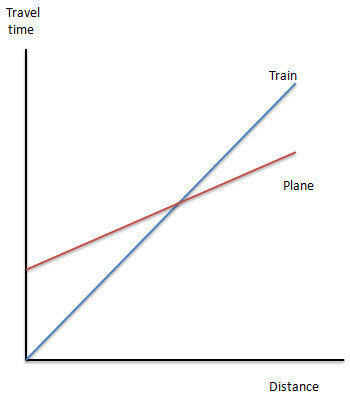
Suppose that I put those fixed costs at 2 hours; suppose that planes fly at 500 miles an hour; and suppose that we got TGV-type trains that went 200 miles an hour. Then the crossover point would be at 667 miles. It would still be much faster to take planes across the continent — but not between Boston and DC, or between SF and LA.

This is just so obviously right, and furthermore strikes me as a prime example of how policy should get made (but too rarely is): empirically. Figure out where those lines cross and then heavily fund everything pre-cross. Just flat out eliminate all other passenger rail until demand is measurably there to support it (ascertained via the same type of calculation). Then the GOP could actually make sense (for once) when they agitate for Amtrak to make money or be eliminated. Instead, they force a vast array of unprofitable routes on it, put the whole of Amtrak’s financial outlook on the back of the northeastern corridor, routinely underfund or defund infrastructure in said corridor, and then wonder why service is relatively slow there and insufficient to turn a profit for the whole rest of the system.

And but also I really think the reflexive GOP train opposition boils down to 1) they perceive it as something that reliably pisses liberals off –and– 2) white suburban conformists in the vast not-the-northeast part of the country just can’t fathom how hard it can be to drive anywhere, much less to set out on the Interstate and face traffic like the western US experiences only in city centers and only at rush hour for the whole X-hundred mile trip. This makes the train seem like the best possible option for many shorter trips. Add that to a predilection for destination cities in which a car is not only unnecessary, but can even be a hindrance and then the true shape of this policy disconnect takes form:
The west sees trains as steam powered slowpokes that drop you off and leave you walking great distances in decidedly pedestrian unfriendly settings. The east sees trains as efficient (and often faster) conveyances that drop you off exactly in the middle of everything, with easier access to the places you are most likely going than you could ever hope to achieve by car.

In this way, both side can’t even fathom the position of the other…and the folks out west go so far as to studiously avoid the train systems when they come east. Even when they move here, they tend to gravitate to the farthest exurb they can find and drive everywhere. This usually boils down to inchoate fear of something with which they have no frame of reference, a well marinated and studiously husbanded fear of the “inner cities,” or just a simple sense of “you drive to work” because that’s what they’ve always done. But, trust me tourists: if you can navigate Boston by car, you sure as hell can use the T. And, as a bonus, you are much more likely to survive.

For we must consider that we shall be as a city upon a hill. The eyes of all people are upon us.

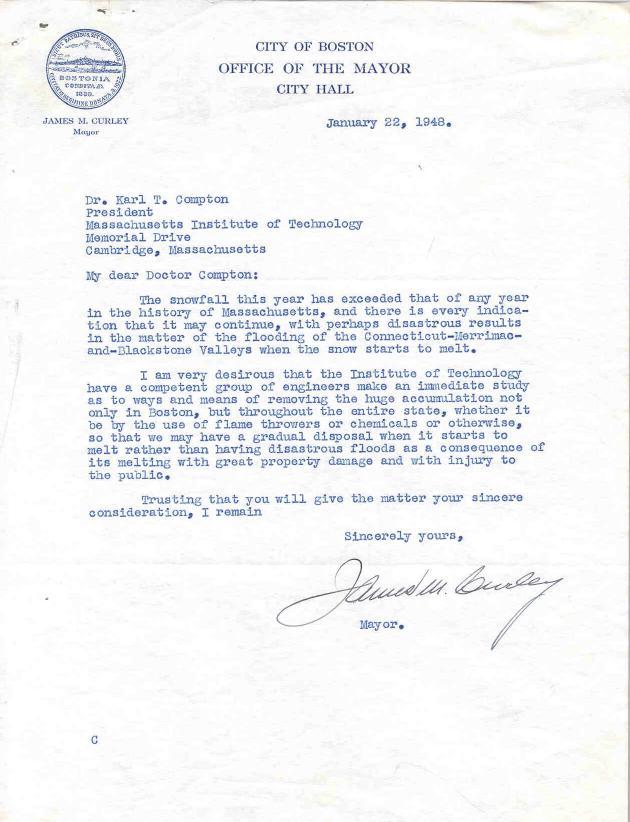
Governor John Winthrop founded the City of Boston on this day, Sept. 17, 1630.
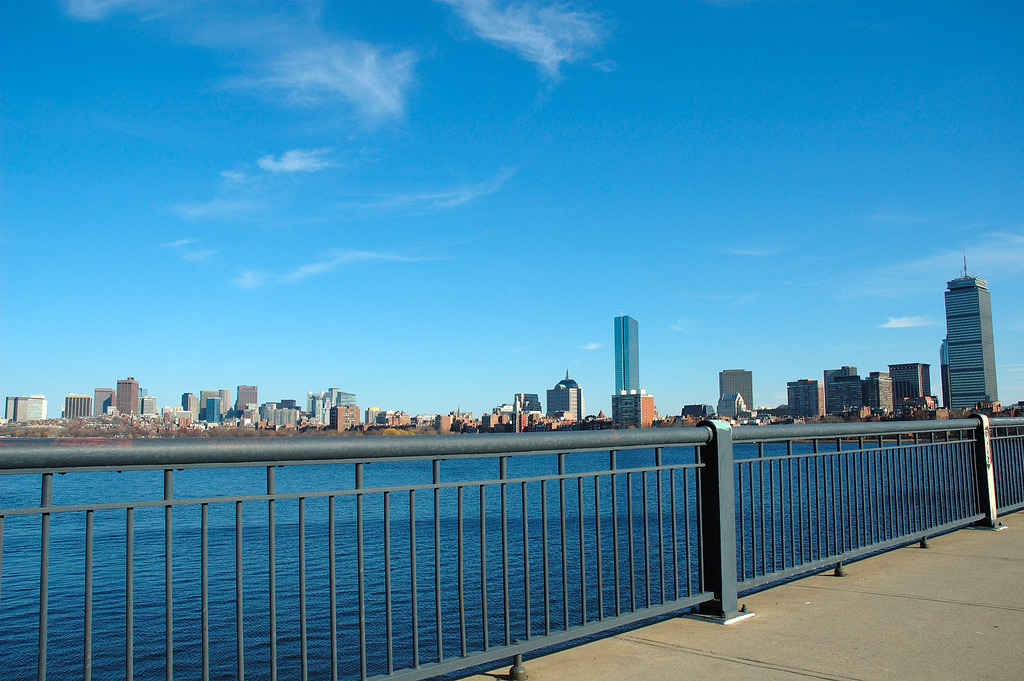
The top of said hill was promptly lopped off and turned into the Back Bay. Government takeover of landfill and etc…, but at least the gambit ultimately paid off handsomely and benefits the very, very rich. So: win/win.

I said: hot out there.

Average high for Boston today? 79°F.

Temperature right this very second? 88°F

The same can be said for most if not all of the eastern seaboard of Our Great Republic.

This must be extremely embarrassing for the global warming deniers. I’m already sick of the blanket coverage of this heat and how embarrassing it is for them. Such blather is sufficiently prevalent that probably one half of one degree of this heat is directly attributable to B-roll of eggs frying on pavement.