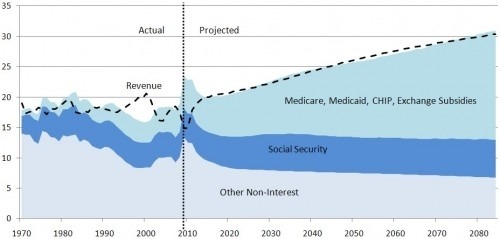
As Ezra Klein suggests, all economic conversations should begin (and end) with this graph. If we do nothing, the budget comes basically into balance:

But nothing is hard to do. This nothing, for instance, includes three crucial elements: (1) All the Bush tax cuts expire, as they’re currently scheduled to do; (2) The Medicare doc fix is either implemented or its repeal is paid for over the next 70 years; and (3) the Affordable Care Act is implemented, and all of its spending targets are met and all of its taxes are collected.

I’ll wager 1 million dollars that this topic or any discussion even remotely resembling it comes up exactly zero times in Obama’s Wednesday remarks.

It’s short, it’s simple, it’s understandable, and it’s true. All good reasons it won’t be used to bludgeon the GOP in the run-up to 2012.
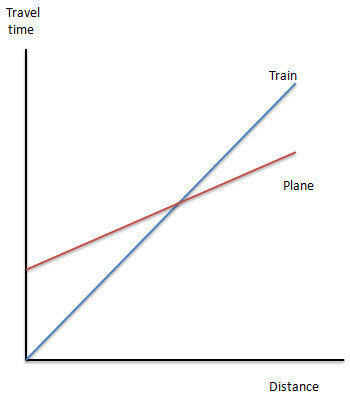
Krugman:

Suppose that I put those fixed costs at 2 hours; suppose that planes fly at 500 miles an hour; and suppose that we got TGV-type trains that went 200 miles an hour. Then the crossover point would be at 667 miles. It would still be much faster to take planes across the continent — but not between Boston and DC, or between SF and LA.

This is just so obviously right, and furthermore strikes me as a prime example of how policy should get made (but too rarely is): empirically. Figure out where those lines cross and then heavily fund everything pre-cross. Just flat out eliminate all other passenger rail until demand is measurably there to support it (ascertained via the same type of calculation). Then the GOP could actually make sense (for once) when they agitate for Amtrak to make money or be eliminated. Instead, they force a vast array of unprofitable routes on it, put the whole of Amtrak’s financial outlook on the back of the northeastern corridor, routinely underfund or defund infrastructure in said corridor, and then wonder why service is relatively slow there and insufficient to turn a profit for the whole rest of the system.

And but also I really think the reflexive GOP train opposition boils down to 1) they perceive it as something that reliably pisses liberals off –and– 2) white suburban conformists in the vast not-the-northeast part of the country just can’t fathom how hard it can be to drive anywhere, much less to set out on the Interstate and face traffic like the western US experiences only in city centers and only at rush hour for the whole X-hundred mile trip. This makes the train seem like the best possible option for many shorter trips. Add that to a predilection for destination cities in which a car is not only unnecessary, but can even be a hindrance and then the true shape of this policy disconnect takes form:
The west sees trains as steam powered slowpokes that drop you off and leave you walking great distances in decidedly pedestrian unfriendly settings. The east sees trains as efficient (and often faster) conveyances that drop you off exactly in the middle of everything, with easier access to the places you are most likely going than you could ever hope to achieve by car.

In this way, both side can’t even fathom the position of the other…and the folks out west go so far as to studiously avoid the train systems when they come east. Even when they move here, they tend to gravitate to the farthest exurb they can find and drive everywhere. This usually boils down to inchoate fear of something with which they have no frame of reference, a well marinated and studiously husbanded fear of the “inner cities,” or just a simple sense of “you drive to work” because that’s what they’ve always done. But, trust me tourists: if you can navigate Boston by car, you sure as hell can use the T. And, as a bonus, you are much more likely to survive.

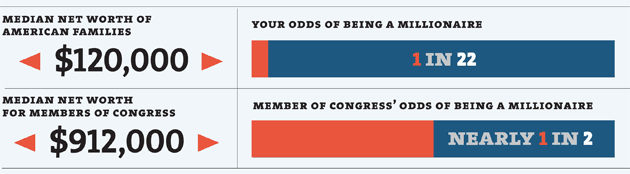
Or: Why most of Congress could give a shit about unions, jobs, and generally thinks Social Security needs to be discontinued as soon as possible because who even needs that kind of small-potatoes stuff unless they totally screwed up or chose a bad accountant?

From the supplemental graphs section (seriously) of Kevin Drum’s excellent piece on Our Plutocracy and ever growing inequality.

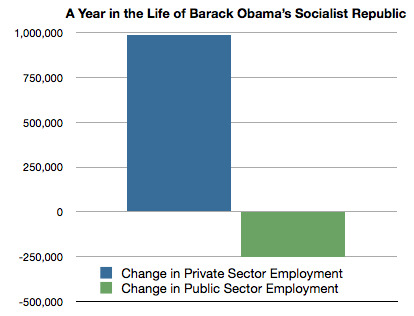
Yglesias points out the creeping government takeover of everything in the socialist hell that is Obama’s America…

I can’t imagine why conservatives aren’t more honest about this.

But the facts remain: government is smaller under Obama. Jobs in the private sector have been created under Obama, and some of those jobs have been created through the actions of the stimulus. Period.

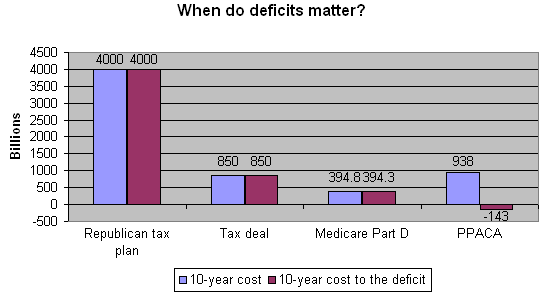
Ezra Klein points out what should be obvious, that all the folks screaming about deficit implications and the Affordable Care Act are, in fact, screaming about positive deficit implications (see: PPACA and red column) and, even if we simply take it on costs alone (as separate from any deficit impact), the ACA amounts to a rounding error when compared to the GOP’s tax proposals.

But it is best not speak of any of this. Ever.

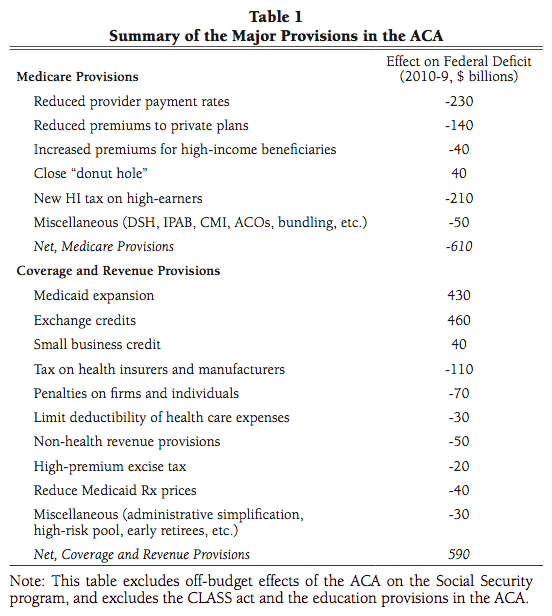
Another several of the big lies laid out by a single table. Last I checked, 590+-610=-20. This is something I learned in Two Minus Three Equals Negative Fun starring Troy McClure, which did have a decidedly liberal math bias now that I think back…

Full document available if you click. Note to Democrats: print out, laminate, and refer to often.

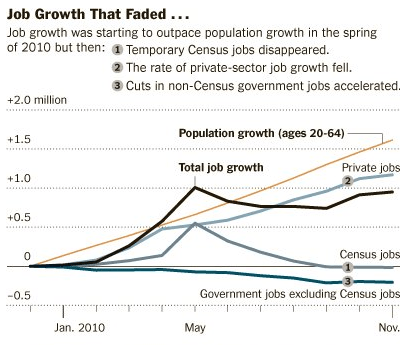
Several of The Big Lies put to, er, lie in one graph.

A) “No jobs have been created in the Obama administration, stimulus or otherwise,” unless, that is, you count all those jobs that have been created. Fewer than necessary to be sure, but indisputably there are jobs being created and tasks done in exchange for money.

B) “Government has exploded in the Obama administration” unless, of course, you exclude temporary census workers or set utterly arbitrary start/end dates to capture peak census-hiring (but not their subsequent and prompt return to zero). In fact, line 3 clearly shows government has indeed gotten smaller (as measured by employment) under Obama. This also holds as a percent of GDP, but that’s another graph.

C) “Government-funded jobs aren’t ‘jobs’ at all,” until you start to think about that line being parallel to the private jobs line, and where that, collectively, would put the overall employment line relative to population growth.
I mean, if you’re going to do crazy things like employ people by funding and then building infrastructure projects until the economy recovers, and then count those people as actually employed, well, then I think we know you’re a dirty fucking hippy who needs to shut the fuck up and worry a lot more about the bond vigilantes who are going to show up any day now to get 10-year bond interest rates up way, way above 2%, you can be sure. So there. Any. Day. Now.

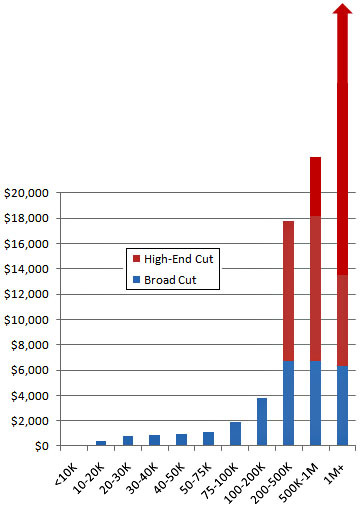
Right on, Kevin Drum. Implicit here is what nobody ever seems to say: if your taxable income is $250,001, you will see tax increase only on that last one dollar. You still get the tax break on the first $250K, just like every single other American. Compare that to the GOP plan (red portion of bars). Utter and indefensible lunacy.

And yet The Democrat is absolutely getting his clock cleaned on this.

I don’t see any possible repercussions to this fecklessness and timidity in the face of a fight on which you hold the economic, moral, and public-opinion high grounds once we get to the real fight early next year on the debt ceiling.