
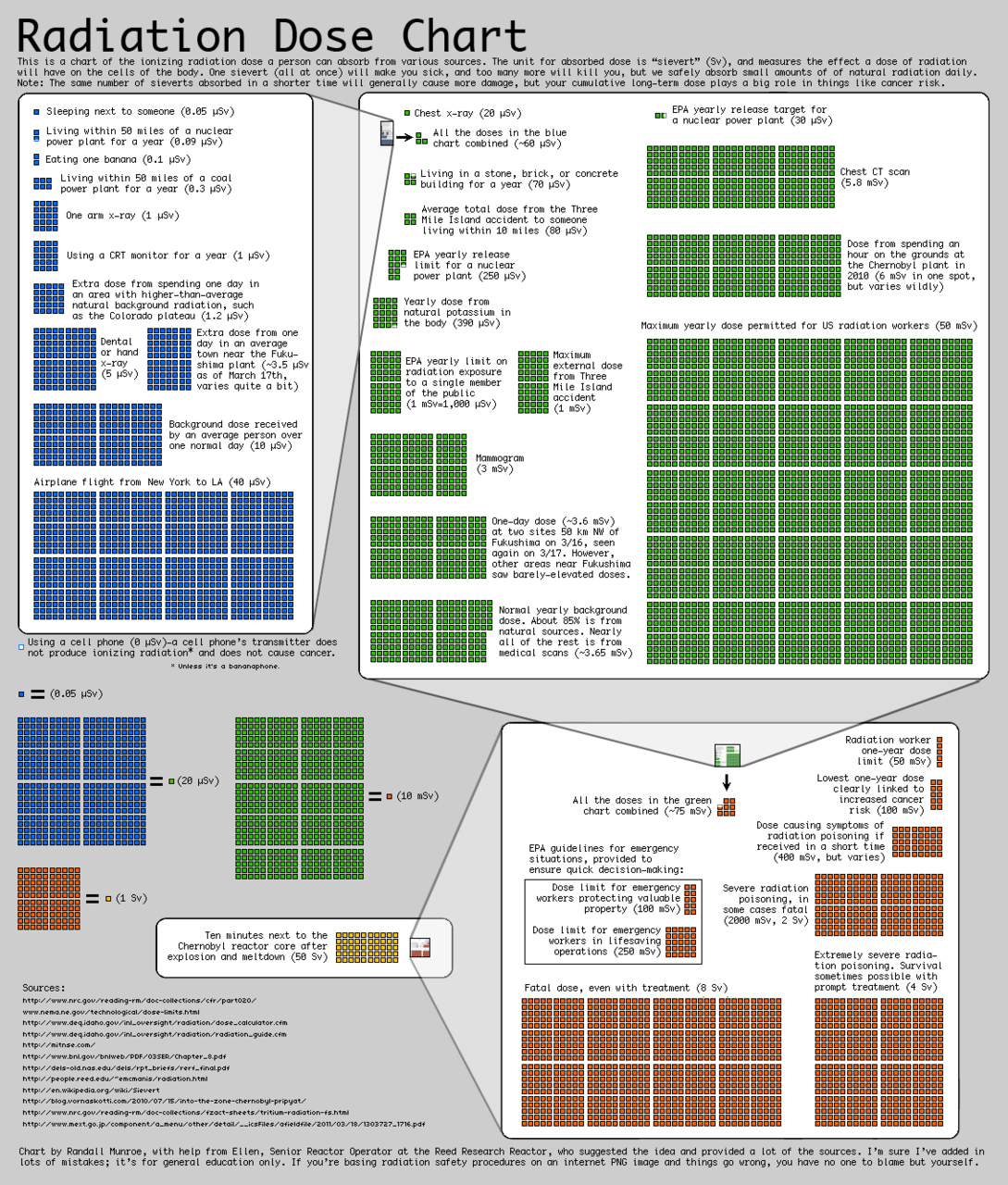
xkcd puts radiation dosages into context. Yes, that xkcd, a comic, alone and most definitely not anyone in the MSM.
xkcd puts radiation dosages into context. Yes, that xkcd, a comic, alone and most definitely not anyone in the MSM.
According to recalibrations of old seismograms by the US Geological Survey (USGS), 11 “megathrust” earthquakes with an 8.5 magnitude or greater occurred worldwide in the twentieth century. Ten of these 11 earthquakes occurred offshore or near a coast, nearly all with tsunami damage. So far in the twenty-first century, five such megathrust earthquakes – with severe tsunami damage in four cases – have occurred offshore.
Proper use of earthquake science advises against an overreaction to the Tohoku disaster, but also spotlights further dangers that policymakers must take into account.
[…]
Aftershock patterns benefitted earthquake forecasting when Ross Stein and his USGS colleagues discovered that the stress increments of past large earthquakes were good predictors of where the next large earthquake would occur. Long after the aftershocks subsided – months, years, or decades after – another earthquake of similar size often broke within the next segment of the fault zone, where stresses had been increased only slightly in relative terms. How time-delayed stress-triggering occurs is a mystery, but it has been documented worldwide.
An irregular series of large, damaging earthquakes shook the North Anatolian Fault in the twentieth century from east toward the west across modern-day Turkey, reaching the Sea of Marmara in 1999 with the Izmit earthquake. Stress increments from Izmit have loaded the fault segment next to Istanbul. The 6.6 magnitude San Fernando earthquake in 1971 loaded the nearby fault that caused the 6.7 Northridge earthquake in 1994. More germane to Japan, the 9.3 Sumatra-Andaman megathrust earthquake in December 2004 loaded the next subduction-zone segment to the south, and this segment generated an 8.6 megathrust event only three months later in March 2005. No prediction can be made today for Japan, but it is safe to forecast a sharply increased probability for a major earthquake on the broad, simple subduction-zone segments both north and south of the Tohoku rupture zone. The segment to the south lies offshore the Tokyo metropolitan area.
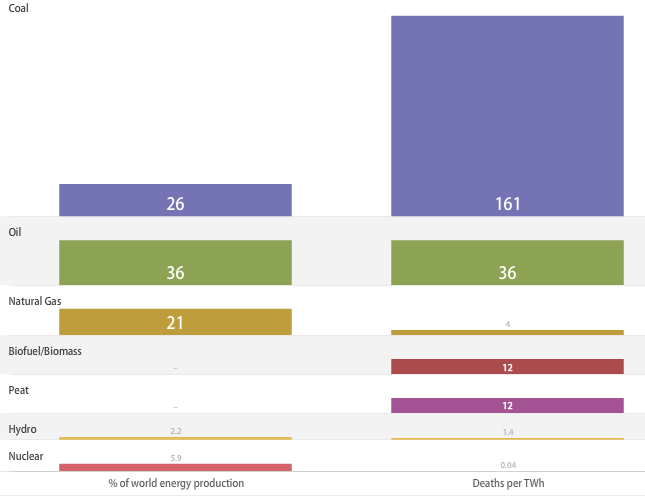
Coal kills many, many more people per TWh (tera-watt hour) of global production than any other source. Also worth noting that coal ash, seemingly released by the zettaton and then left in place wherever it may land in TN, is far more radioactive than nuclear waste.
Some accounting matters:
The 9.0 magnitude quake (the fourth-largest recorded since 1900) was caused when the Pacific tectonic plate dove under the North American plate, which shifted Eastern Japan towards North America by about 13 feet. The quake also shifted the earth’s axis by 6.5 inches, shortened the day by 1.6 microseconds, and sank Japan downward by about two feet.
 Lemkin